
Micro 800 Series Controllers: What Makes Them Stand Out
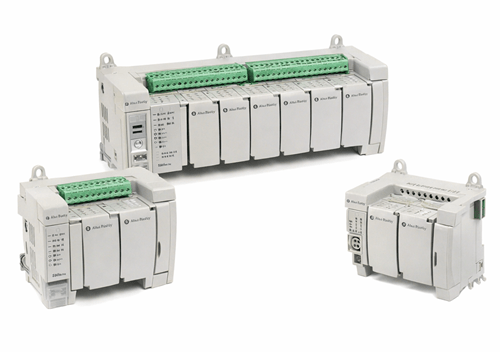
In the world of industrial automation, not every application requires the power—or the price tag—of a high‑end PLC. That’s exactly where Rockwell Automation’s Micro800 series controllers fit in. Designed as a compact, cost‑effective control platform, the Micro800 family delivers the essentials for machine builders, OEMs, and small automation projects without sacrificing flexibility or performance.
If you’ve ever wondered whether Micro800 controllers are the right fit for your next project, this quick guide breaks down
what they offer, where they shine, and how they compare to other Rockwell platforms.
What Is the Micro800 Series?
The Micro800 family is Rockwell’s line of small, modular programmable logic controllers aimed at simple to moderately complex automation tasks. They’re built to be:
- Affordable for cost‑sensitive application
- Modular, allowing you to add only the features you need
- Easy to program using Connected Components Workbench (CCW)
- Compact, making them ideal for small panels and standalone machines
The series includes several models—Micro810, Micro820, Micro830, Micro850, and Micro870—each offering different levels of I/O capacity, communication options, and performance.
💰 Why Micro800 Controllers Matter– Cost‑Effective Automation
Unlike fixed‑I/O micro PLCs, Micro800 controllers support plug‑in modules and expansion I/O. This means you can tailor the controller to your machine’s exact needs—analog inputs, high‑speed counters, communication modules, and more—without jumping to a larger platform.
For OEMs building high‑volume equipment, cost matters. Micro800 controllers deliver essential PLC functionality at a fraction of the cost of CompactLogix or ControlLogix systems. They’re ideal for:
- Packaging machines
- Conveyors
- Small pump systems
- HVAC equipment
- Simple process control
🛠️Programming with CCW
Connected Components Workbench (CCW) is the software environment for Micro800 controllers. While it’s simpler than Studio 5000, it still supports:
- Ladder logic
- Function block diagrams
- Structured text
- User‑defined function blocks
- Simulation tools
CCW is designed for quick development and deployment, especially for smaller machines that don’t require the complexity of Logix‑based platforms.
🌐 Communication Options
Depending on the model, Micro800 controllers support:
- Ethernet/IP
- Modbus TCP/RTU
- Serial communication
- USB programming
- Embedded web servers (Micro820)
This makes them surprisingly capable for integrating with HMIs, drives, and third‑party devices.
Micro800 Family
| Model | Best For | Key Features |
| Micro 810 | Very small logic tasks | Built‑in smart relay functions, simple programming |
| Micro 820 | Remote monitoring, small process control | Ethernet, SD card, embedded web server |
| Micro 830 | High‑speed control | High‑speed counters, plug‑in modules |
| Micro 850 | Mid‑range applications | Larger I/O capacity, Ethernet/IP |
| Micro 870 | Complex small machines | Up to 4 expansion modules, enhanced memory |
⭐ Strengths
- Excellent price‑to‑performance ratio
- Flexible modular design
- Good communication support for small systems
- Ideal for OEMs and standalone machines
- Easy to scale within the family
⚠️ Limitations to Consider
- Not compatible with Studio 5000 or Logix tags
- Less powerful than CompactLogix
- CCW has a learning curve and fewer advanced features
- Not ideal for large, distributed, or safety‑critical systems
If your application requires motion control, high‑speed networking, or complex data handling, you’ll likely outgrow the Micro800 platform.
When to Choose Micro800 Over CompactLogix
Choose Micro800 when you need:
- A low‑cost controller for a simple machine
- Basic logic, analog control, or small‑scale automation
- A compact footprint
- Quick deployment with minimal overhead
Choose CompactLogix when you need:
- Integrated motion
- Large tag‑based programming
- High‑performance networking
- Complex machine coordination
 plc-automation.net